Direct Marketing: Selling Products Right Off the Farm
July 13, 2026, 5:10 pm
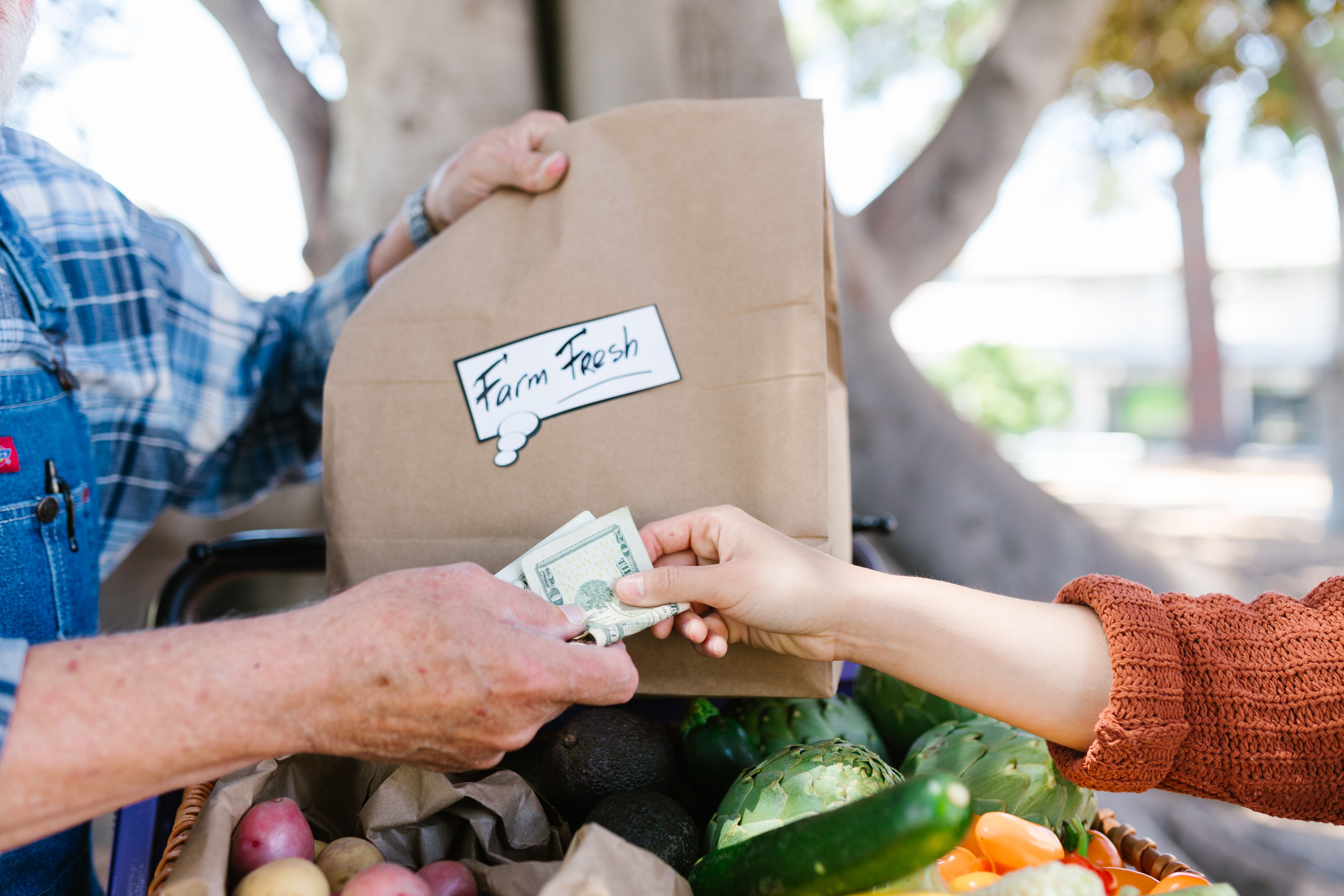
So, you’re a farmer looking to sell your products directly to consumers. What a beautiful thing. And really, these days it makes more sense than ever before. The public is looking for new sources for their food. The cost of groceries is rising and the interest for locally grown products is real. But before you start selling you might have some questions about the legality and regulations behind selling directly to your community. We’ll break down the laws behind selling specific types of products as well as some province specific guidelines. It might be simpler than you think. Let’s dig in.
Vegetables, Fruit and Honey
There are no federal licenses required for selling fresh produce that you grew directly to customers. You’re typically in the clear with selling fresh produce and honey in Canada. That is to say, no extra permits or paperwork are required. Things get tricky if you start selling across provincial boundaries; there are specific guidelines regarding cross-provincial trade. But if you’re selling only within your province, you’re good to go. When selling honey, it is a federal requirement that it is safe for consumption, labelled correctly if packaged and truthfully described. Adding sugar and calling it honey is prohibited by law (thank God!)
Meat and Dairy
Here’s where things get real. The selling of meat and dairy products is strictly controlled no matter which province you’re setting up shop in. The reasons behind this are many and frankly, quite understandable. From pathogens to spoiling, there are lots of ways that animal products can affect the public negatively. Things can go south quickly. This is why, typically, any meat sold to customers must come from an animal that has been slaughtered and processed in a government inspected facility. Unauthorized sale of uninspected meat is prohibited under federal and provincial law.
Now, there are a few exceptions to the rule depending on which province you are in. Some provinces have special licensing schemes aimed at supporting small producers but inspection and how/where animal products are sold are still regulated. In British Columbia, Farmgate and Farmgate Plus licenses exist where producers can slaughter and sell meat products directly to the consumer. The product must be labeled “Not Government Inspected”. In Alberta, you need a “Food Establishment Permit” to sell meat at venues like a farmers’ market and the meat needs to be government inspected to be offered for sale.
Dairy products are even more heavily regulated. Across most of Canada, the sale of unpasteurized milk for human consumption is illegal. Licensed producers need to registered with provincial dairy boards and meet inspection criteria. Licensed producers who want to sell their dairy products to the public require further licenses and permits. The dairy industry is indeed a deep rabbit hole, and I think it requires a separate post just so I can really hammer out the details. But in short, just think dairy equals regulation. It is one of the most controlled food products in Canada.
Eggs
Across Canada, eggs can typically be sold directly to consumers right off the farm. Now, if you are selling commercially to retail stores, restaurants or wider markets, your eggs need to be “Graded”. This entails evaluating the eggs for quality, cleanliness etc. by a licensed egg grader. But if you are simply selling at your local farmers market, you’re typically in the clear as long as you label your eggs as “Ungraded”.
Processed Foods
Whether it’s jam, jelly or jerky, selling processed food can be profitable and absolutely legal. Depending on the scale of your operation, it might not even require a licensed kitchen. Small producers who sell direct to consumers are often exempt from federal CFIA license as long as they sell within their province. They can also be exempt from adding a nutritional facts table to the label. A product description, business information and allergen disclosures are never exempt and need to be added to the label. All of these again varies from province to province. Alberta is quite strict, requiring licensed kitchens and label rules for processed foods. Always check with your province’s health authority for guidelines on selling your goods.
Quick Guide
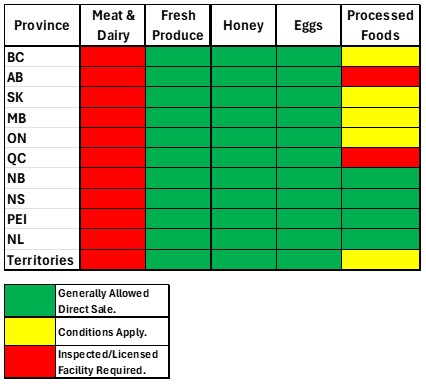
Here’s a quick guide on the legality and regulations for selling your goods directly to consumers. If you’re in need of a more detailed, province by province breakdown, shoot me an email through our contact page. I’d be more than happy to help.
References
- https://inspection.canada.ca/en/food-labels/labelling/industry
- https://inspection.canada.ca/en/food-labels/labelling/industry/honey
- https://inspection.canada.ca/en/food-labels/labelling/industry/meat-and-poultry-products
- https://laws-lois.justice.gc.ca/eng/regulations/SOR-2018-108/
- https://laws-lois.justice.gc.ca/eng/acts/S-1.1/
- https://open.alberta.ca/publications/844-1
- https://www.albertahealthservices.ca/eph/page13979.aspx
- https://www2.gov.bc.ca/gov/content/industry/agriculture-seafood/animals-and-crops/animal-production/meat-processing-and-inspection
- https://www.eggs.ca/
- https://www150.statcan.gc.ca/n1/pub/96-325-x/2021001/article/00014-eng.htm
×
Right on!