Spotlight: Backyard Bounty
October 9, 2026, 12:24 pm
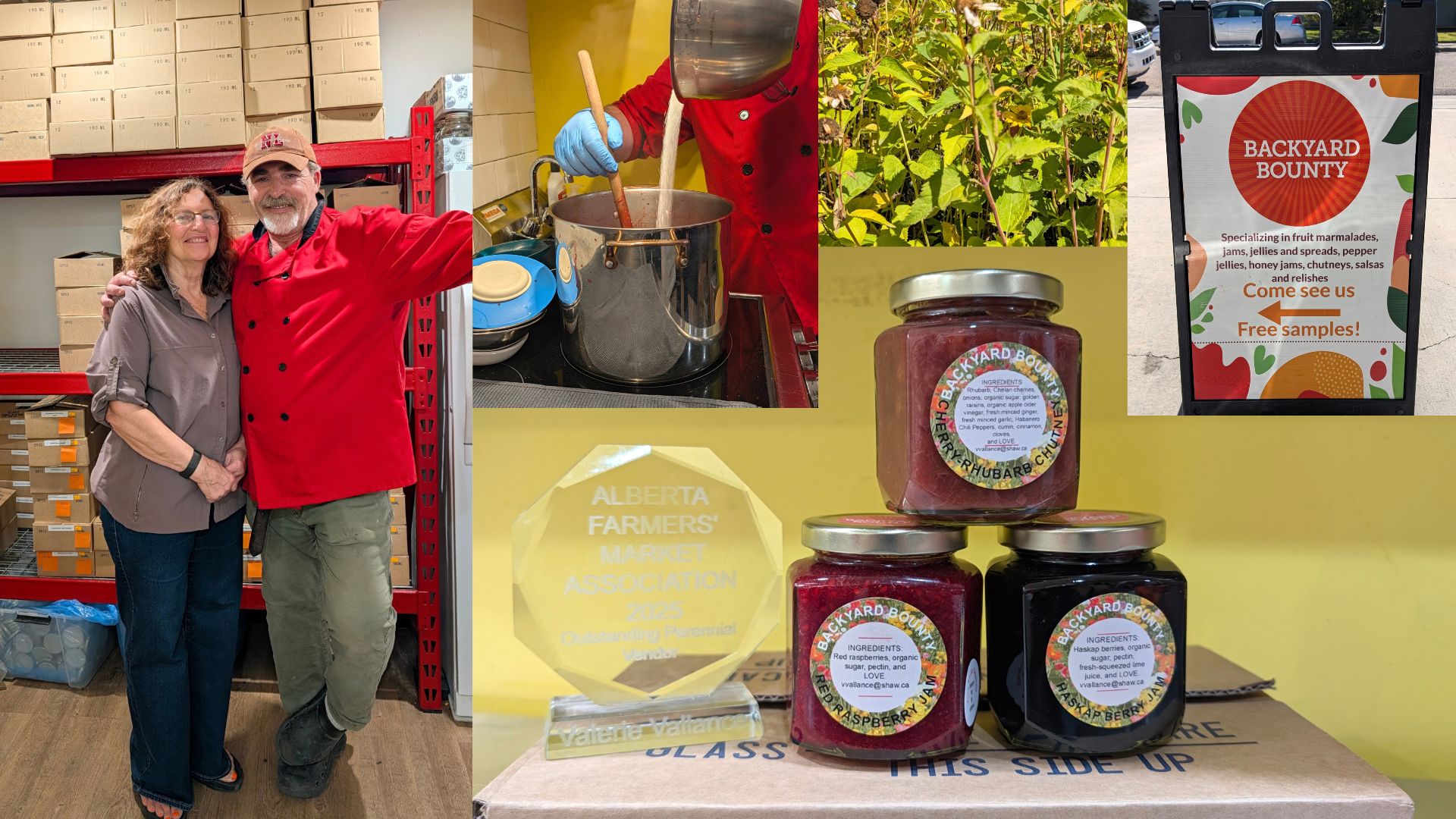
Backyard Bounty produces honey and over 200 different types of jams, marmalades and more out of their home in Calgary, Alberta. They are beekeepers but primarily for the purpose of pollinating the blooms of their lush terraced urban food forest. Completely organic, their urban food forest is carefully tended, and weeds are picked by hand. Backyard Bounty also operates a fully permitted and inspected commercial kitchen, where various salsas, jams, jellies, chutneys and marmalades are produced. We want to highlight this local producer’s hard work, ingenuity and dedication to bringing locally grown products to their community.
The Urban Food Forest
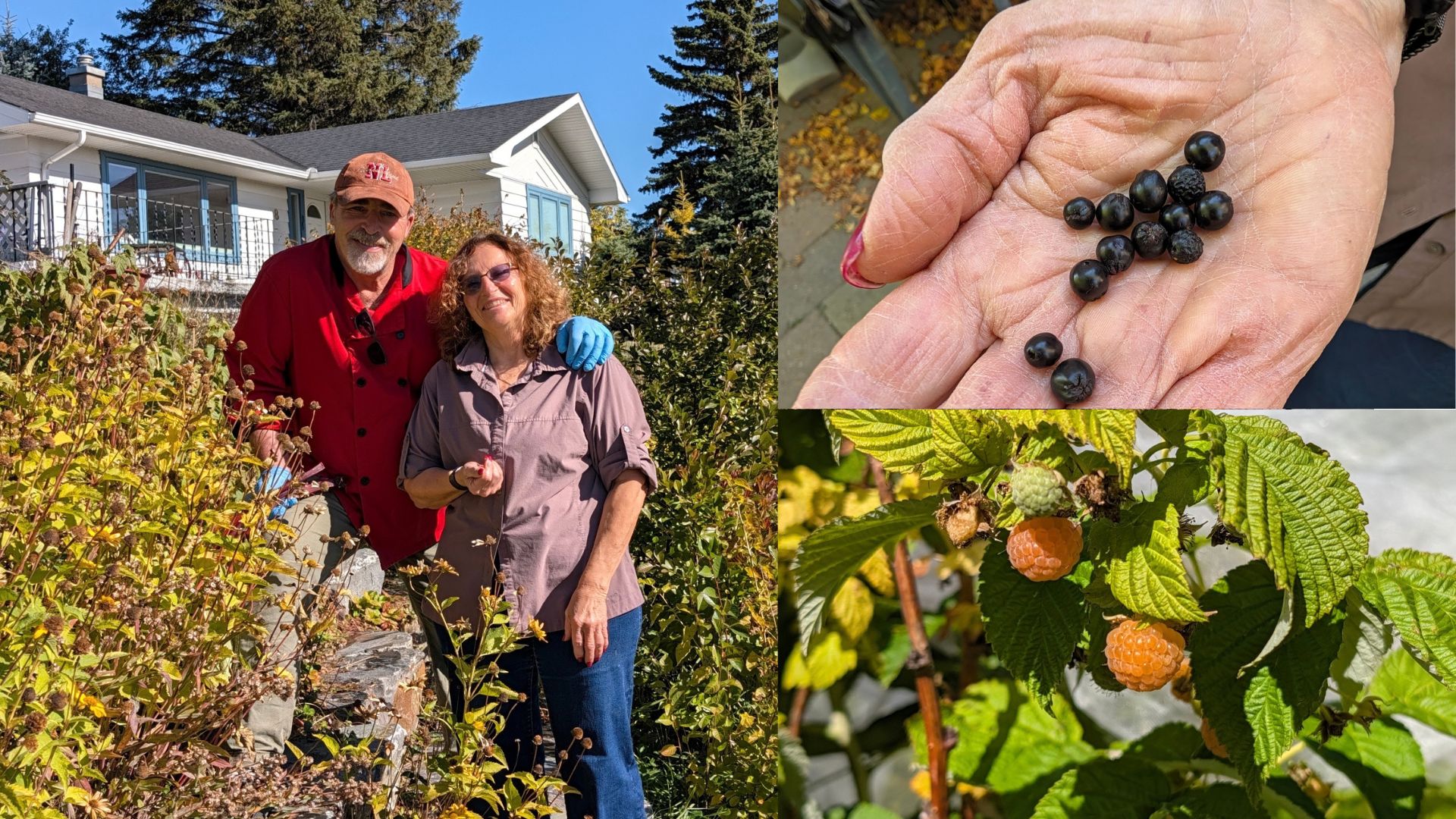
Etched into the front yard of a home in Northwest Calgary, grows a truly spectacular garden. When I saw it from the street on a sunny October afternoon, I was truly awestruck. My only regret is that I didn’t see it in the spring. I mean who tours a garden in the fall anyways? Nevertheless, the urban food forest of Backyard Bounty was a sight to behold. It was terraced to accommodate the slope of the yard and on each terrace, a different variety of flowers, cherry, plum and berry bushes were settling in for the winter. The owners Valerie and Travis greeted me at the front gate, and I was led into their little slice of heaven. I brought out my notepad, and they commenced the tour. I quickly realized I write too slowly. The sheer diversity, the scale of abundance of plants growing on the terrace was staggering.
The urban food forest is home to six varieties of haskap, six varieties of raspberries, and red, white and black currants. The golden raspberries I sampled, were excellent. Sour and nanking cherries, rhubarb, tomatoes, peppers and gooseberries. A green apple tree, a crab apple tree and several varieties of herbs. Flowering plants, including golden rod, day lilies and bee balm, sprout up here and there. A river of wild strawberries meanders over the path. It really is closer to a forest than a garden. Now growing for six years, the urban food forest is completely organic. No herbicides or pesticides are used. Rainwater is collected, then used for irrigation. Valerie explains that they are beekeepers, but primarily for pollinating the plants in both the front and back yards. Anytime I hear bees, my ears prick up. I asked to see them, and was led into the backyard, walking along a patch of potatoes.
The Bees in the Back
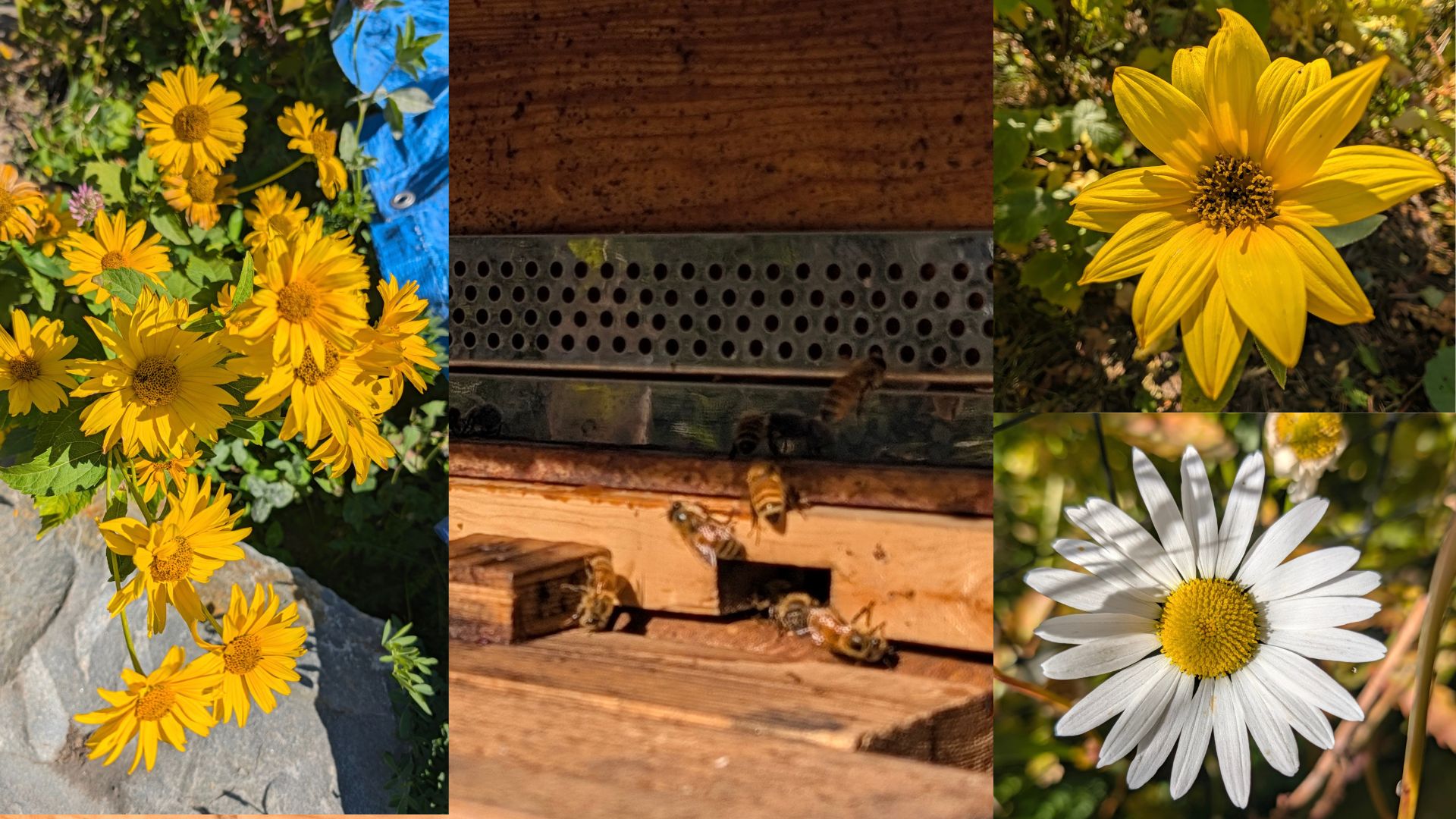
Nestled behind a sea of raspberry bushes, the bees were still busy and preparing themselves for the winter months. Backyard Bounty manages three hives during the peak season when the bee population reaches over 50,000. Over the winter, the number of bees reduces to only 500 individuals. Unlike a lot of modern beekeeping operations, Travis and Valerie do not feed their bees sugar or sugar water for overwintering. They explain that doing so usually results in the sugar winding up in the honey. Sugar rich honey is easy to spot in your pantry; if your honey starts to crystallize when the jar gets low, it contains sugar. Conversely, pure honey will only turn more syrup-like as you use it. Instead, they only take a minimal amount of honey from the hives leaving the rest for the bees. The hives they use are called top bar hives. Less common than the typical Langstroth hive, this type of hive setup allows the bees to build their comb naturally from the top down. Each top bar hive section holds twice the volume of a Langstroth frame hive. It’s all a pretty slick operation. The bees pollinate the urban food forest and collect honey. The urban food forest produces fruits and vegetables that Backyard Bounty can then use to make a variety of preserves that is equally as diverse as their garden.
The Commercial Kitchen
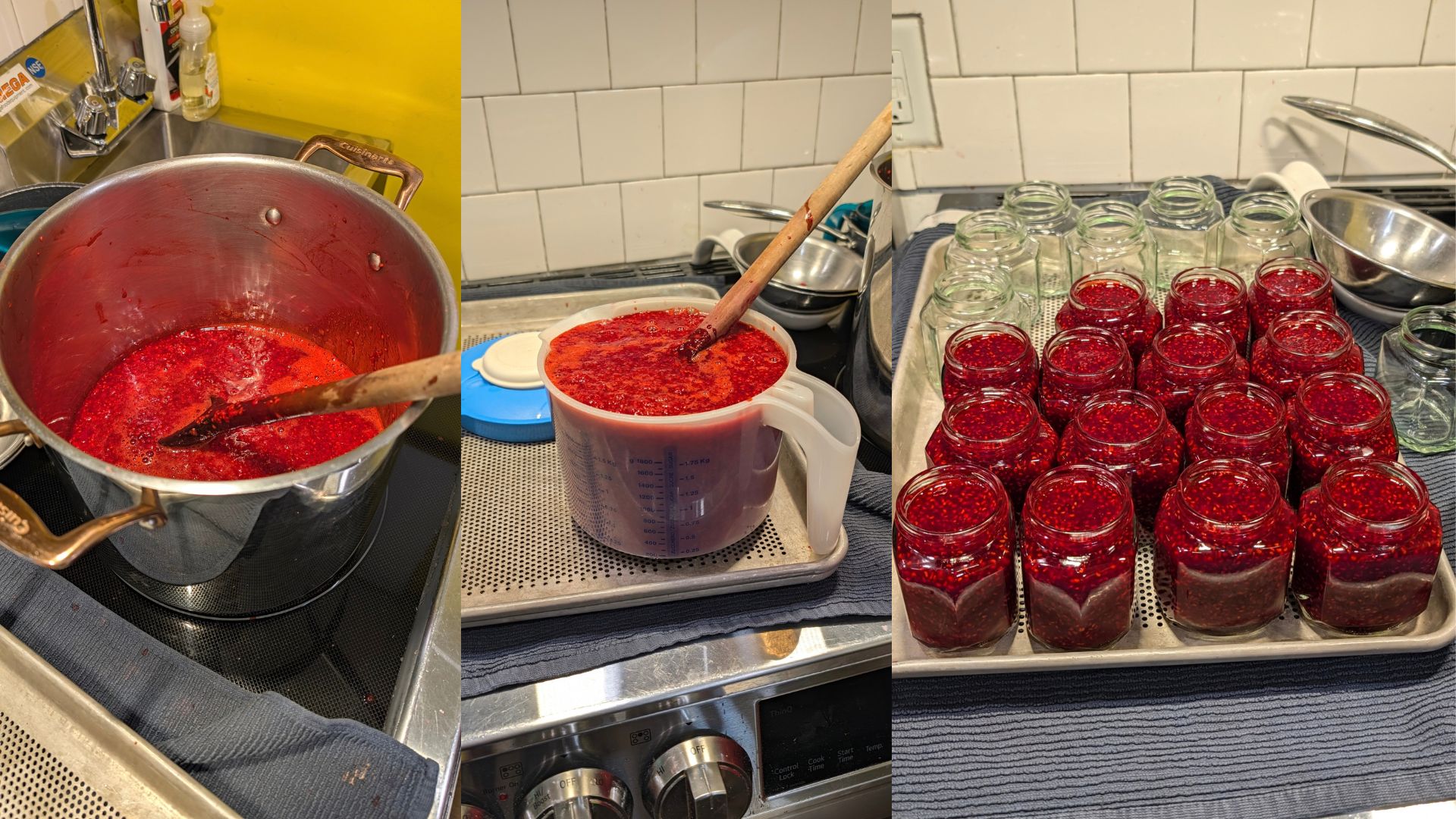
The inner sanctum of Backyard Bounty is a home-based, inspected, commercial kitchen. Out of this kitchen, Travis and Valerie produce a plethora of different a jams, jellies, marmalades, salsas chutneys and more. It’s considered small batch cooking, and I was even able to witness them produce a raspberry jam. The ingredients are deliciously simple. Hand picked raspberries, organic cane sugar and pectin. The raspberries are gently cooked in a stainless-steel pot, stirring constantly. Pectin is added to the raspberries, which are gently cooked and then cane sugar is poured in slowly. Once the chefs are happy with the consistency, the jam is ladled into glass jars. Backyard Bounty test the pH of each of their products to ensure that the product will be shelf stable, which it typically is for about 3 years. All the while, Valerie and Travis tell me more about their business. They offer a jar return program; each jar gets a fully-refundable jar deposit. When a jar is returned, the client is awarded a one-dollar refund. In essence, loyal clients swap out their jars for more product and no jar deposit. They have 18 to 24 different varieties of marmalade available at any time through out the year. Backyard Bounty is truly a remarkable business. They push the limits of urban farming and exemplify just how much you can produce out of your own backyard.
You can find Backyard Bounty at the Crossfield, Cambrian Heights, Bearspaw, Hillhurst-Sunnyside and Marda Loop (cSPACE) Farmers Markets. They also offer delivery. A variety of their products are available at the Prairie Mill Bread Company, Souto Farm Store and Rustic Sourdough Bakery as well as the Apple Lady Store. You can find them on Instagram @backyardbounty_yyc and on Facebook at valsbackyardbounty. Backyard Bounty is the recipient of the 2025 Perennial Vendor Award and have a deep passion for providing home grown products to the community.
×
Right on!